
- Most vehicle wrap quotes go wrong before a single design decision is made — errors at the information-gathering stage lead to inaccurate pricing and costly surprises later.
- The gap between a full wrap and a partial wrap isn’t just visual — it can represent a significant difference in cost that many businesses don’t anticipate when budgeting.
- Material finish choices (matte, gloss, chrome, textured) affect not just appearance but long-term durability and overall value — a detail that’s easy to overlook when comparing quotes.
- Design mistakes like low-resolution images and cluttered layouts don’t just look unprofessional — they can inflate costs and force expensive revisions.
- Understanding what a transparent, itemised quote should include is the clearest way to judge whether a wrap provider is being straight with you — more on that below.
Getting a vehicle wrapped is one of the most cost-effective ways a local business can advertise. A well-executed wrap turns every journey into a moving billboard, reaching thousands of people without any ongoing spend. But the gap between a sharp, professional result and a botched, overpriced job often comes down to what happens during the quoting stage — long before any vinyl is cut or any design is finalised.
Why Most Wrap Quotes Go Wrong Before Design Begins
The quoting stage is where most vehicle wrap projects quietly start to unravel. It’s not always down to dishonest providers — more often, it’s a case of incomplete information being passed between the client and the installer. A quote built on vague or missing details will almost always come back to bite someone, usually the client, when the final invoice looks nothing like the original estimate.
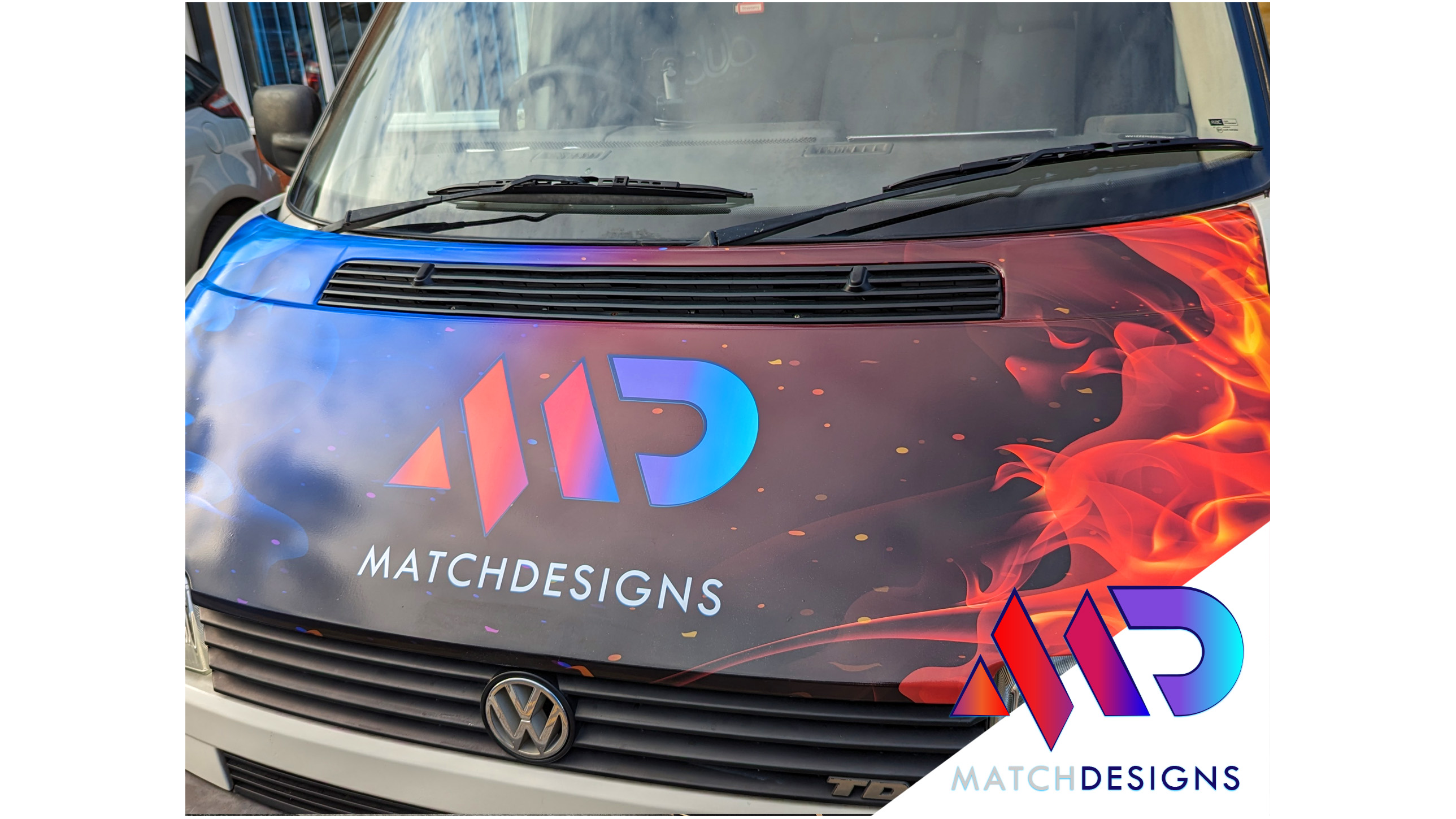
Matchdesigns, a Hull-based graphic design and vehicle wrap specialist, works with local businesses across the region and consistently finds that the same categories of error crop up again and again at the quote stage. Their vehicle wrapping service is built around transparency — but transparency only works if both sides of the conversation are asking the right questions from the start.
Vehicle wrapping involves several moving parts: the vehicle itself, the materials chosen, the design created, and the labour involved in installation. Each of these has its own variables, and each variable has a price tag. When any one of them is poorly defined or ignored entirely during the quoting stage, the estimate becomes little more than a guess. The sections below break down exactly where these errors happen — and what to watch for.
Vehicle Details That Change Everything
1. Overlooking Size, Type, and Body Complexity
It sounds obvious, but a surprising number of wrap quotes are generated based on little more than a general vehicle category — “van,” “car,” or “lorry” — without any consideration for the specific dimensions and body shape involved. This matters enormously. A long-wheelbase Transit and a compact Berlingo are both vans, but the material requirements, labour hours, and complexity of installation differ significantly between them.
Larger vehicles demand more vinyl, and more vinyl means higher material costs. Body complexity plays an equally important role. A vehicle with deep contours, recessed door handles, pronounced wheel arches, or awkward panel shapes requires a more skilled installation process. Certain areas may need the vinyl to be carefully heated and stretched around curves, or cut in ways that maintain a consistent look across difficult surfaces. Each of these steps adds time, and time adds cost.
When a quote doesn’t account for these specifics, the installer is essentially pricing blind. Businesses should always expect a reputable provider to ask for the exact make, model, and year of the vehicle — and ideally to inspect it in person or request detailed photographs before committing to a price.
2. Ignoring Existing Damage, Dents, or Modifications
The condition of a vehicle’s bodywork is one of the most commonly overlooked factors in the quoting process. Vinyl wrap does not conceal imperfections — it amplifies them. Any dent, ripple, rust patch, or surface crack will show through the finished wrap, sometimes more visibly than on bare paint. A vehicle in poor condition isn’t just harder to wrap — it can actively undermine the quality of the result.
Pre-existing modifications present their own challenges. Aftermarket body kits, non-standard panel shapes, or previous wrap adhesive residue all affect how new vinyl applies and adheres. Some of these issues are relatively minor; others require the surface to be professionally repaired or prepared before installation can begin. Either way, they carry a cost — and that cost needs to be factored into the quote from the outset.
A quote that doesn’t ask about the vehicle’s current condition is a quote that’s likely to grow. Businesses should proactively flag any known bodywork issues when requesting estimates, and treat any provider who doesn’t ask about them with a degree of caution.
Full Wrap vs Partial: The Cost Gap Clients Miss
One of the most consistent sources of sticker shock in vehicle wrap projects is the price difference between a full wrap and a partial wrap. Many clients instinctively assume the gap is modest — perhaps a few dozen pounds either way — without realising that a full wrap on a medium-to-large commercial vehicle can cost several times more than a well-placed partial.
A full wrap covers the entire exterior surface of the vehicle: roof, bonnet, doors, bumpers, and all panels. This requires significantly more material, considerably more installation time, and a higher level of technical skill — particularly around the more complex areas of the body. A partial wrap, by contrast, targets specific panels or zones, typically the sides and rear, where visual impact is highest relative to the area covered.
Neither option is inherently better — the right choice depends on budget, branding goals, and how the vehicle is used. A delivery van seen primarily from the side might get more value from a strong partial wrap than from a full wrap that includes a roof nobody ever sees. The key is making this decision consciously, with accurate pricing for both options in front of you, rather than defaulting to one or the other without understanding the cost implications. A wrap provider worth working with will walk through this clearly at the quoting stage rather than defaulting to whatever is simplest to quote.
Material Choices That Catch Businesses Off Guard
1. Matte, Gloss, Chrome, and Textured Finishes Priced Differently
Not all vinyl is created equal, and the finish chosen has a direct and significant impact on cost. Many businesses arrive at the quoting stage with a vague idea of what they want — perhaps something that “looks professional” or “stands out” — without realising that the difference between a standard gloss wrap and a chrome or colour-shift finish can be substantial.
Gloss vinyl is the most widely used and typically the most affordable option, offering a clean, polished look that suits most commercial applications. Matte finishes sit at a similar price point and give a more understated, premium feel. Textured vinyls — such as carbon fibre effect or brushed metal — command a higher price due to the more complex manufacturing process. Chrome and colour-shifting films are at the top of the cost spectrum and require considerable installer expertise to apply without imperfections. Each of these finishes should be clearly itemised in any quote, with the cost per square metre or per vehicle section spelled out explicitly.
2. Durability Trade-Offs That Affect Long-Term Value
Price at the quote stage isn’t the only financial consideration — lifespan matters too. Lower-cost vinyl materials may carry a shorter rated lifespan, typically two to three years, while premium-grade films from established manufacturers are rated for five to seven years or more under normal conditions. Choosing a cheaper material to reduce upfront costs can mean paying for a full reinstallation within a few years, making it a false economy in many cases.
Factors like UV exposure, how often the vehicle is washed, and whether it’s kept outdoors overnight all influence how quickly a wrap degrades. A good wrap provider will discuss these variables during the quoting process and help match the material specification to the vehicle’s use case — rather than simply offering the cheapest option that fits the stated budget.
Design Errors That Inflate Costs and Undermine Impact
1. Low-Resolution Images That Can’t Scale to Vehicle Size
A vehicle wrap is a large-format print product. Images that look perfectly sharp on a website, a business card, or even an A3 poster will often fall apart entirely when scaled up to cover the side of a van. This is one of the most frequent and frustrating design errors encountered at the pre-production stage — and it consistently leads to delays and additional costs as artwork has to be sourced, recreated, or redrawn before printing can proceed.
The issue is resolution. Most web images are saved at 72 DPI (dots per inch), which is fine for screen display but wholly inadequate for large-format print, where 150 DPI at full output size is typically the minimum, and higher is preferable. Vector artwork — such as files produced in Adobe Illustrator — avoids this problem entirely, as it scales to any size without quality loss. Businesses should always check whether their logo and key brand assets are available in vector format before the design process begins. If they aren’t, factor in the cost of having them redrawn.
2. Designs That Ignore Contours, Seams, and Door Lines
A vehicle is not a flat canvas. It has door gaps, seams, handles, hinges, wheel arches, and body contours that all interrupt the surface the wrap is applied to. Designs created without reference to these structural features routinely produce misaligned logos, text that disappears into door gaps, or graphics that distort awkwardly across panel transitions.
Professional vehicle wrap design requires working from accurate vehicle templates — technical outlines that map the precise dimensions and panel layout of a specific make and model. When designs are created without these templates, or when template-based designs aren’t checked against the actual vehicle, the results can be costly to fix. Revisions at the print stage are expensive; revisions after installation even more so. Working with a designer who understands vehicle wrap production — rather than a general graphic designer — makes a measurable difference here.
3. Overcrowded Layouts and Poor Contrast That Lose the Audience
A vehicle wrap functions as a moving advertisement, seen by pedestrians, drivers, and passengers in brief, often fragmented glances. The design has to communicate instantly — brand, service, and contact detail — in the time it takes someone to pass the vehicle on a pavement or at a junction. Overcrowded layouts that try to convey too much information in too little space simply don’t work in this context.
Common culprits include small-print body copy, multiple phone numbers, lengthy URLs, and busy background patterns that compete visually with the core message. Poor contrast — dark text on a dark background, or light graphics over a pale finish — makes the problem worse. The most effective vehicle wraps are restrained: a strong logo, a clear service descriptor, a single contact method, and a colour palette that creates instant recognition at distance. Every additional element beyond that is a risk to legibility, not an improvement of it.
What an Accurate Quote Should Always Include
1. Itemised Costs for Design, Materials, and Installation
A transparent vehicle wrap quote isn’t a single number — it’s a breakdown. Clients should be able to see exactly what they’re paying for at each stage of the project: the design work, the vinyl material (including the specific product and finish), the print production, and the installation labour. Where applicable, fitting time, any preparation requirements, and removal of an existing wrap should all appear as separate line items.
This level of detail serves two purposes. First, it allows meaningful comparison between providers — if one quote is significantly lower than another, an itemised breakdown reveals whether that’s because of cheaper materials, faster installation methods, or a genuinely more competitive price. Second, it protects both parties if anything changes during the project. If a material becomes unavailable or an additional preparation step is needed, a clearly itemised quote makes it straightforward to discuss what that means for the overall cost, without ambiguity or dispute.
2. Pre-Installation Repair Considerations
Any quote produced without a note on the vehicle’s current bodywork condition is incomplete. As discussed earlier, surface imperfections affect both the appearance and the longevity of a wrap. A professional quote should either confirm that the vehicle has been assessed and is ready for installation, or clearly flag any repair or preparation work that’s recommended before the wrap is applied — along with an indication of how that work will affect the final cost.
This isn’t just about protecting the installer’s reputation. It’s about protecting the client’s investment. A wrap applied over a poorly prepared surface will degrade faster, lift at the edges sooner, and ultimately require replacement earlier than one applied to a clean, smooth, properly treated surface. Skipping this conversation at the quote stage is a false economy — and a sign that the provider isn’t thinking beyond the immediate job.
Get a Transparent Wrap Quote from Hull’s Local Experts
The errors outlined above aren’t rare edge cases — they’re patterns that repeat across the industry whenever the quoting process is treated as a formality rather than a foundation. For businesses in Hull looking to wrap vehicles as part of a broader branding strategy, the quality of the conversation at the quote stage is one of the clearest indicators of the quality of the finished result.
Getting it right means sharing complete vehicle details, asking for material options to be explained clearly, ensuring design files are print-ready before work begins, and insisting on a quote that accounts for all stages of the project — including any preparation the vehicle needs before installation. These aren’t unreasonable requests; they’re the baseline for a professional service.
Businesses that take the time to understand these factors before committing to a provider will find fewer surprises, better results, and a finished wrap that performs as intended — turning heads and generating enquiries every time the vehicle is on the road. The difference between a wrap that works and one that disappoints is rarely the vinyl itself. It’s almost always the process that led up to it.
For graphic design services built around quality and local expertise, Matchdesigns in Hull offers professional vehicle wrapping alongside a full range of visual branding solutions for businesses of all sizes.
matchdesigns
682 Anlaby Road
Hull
England
HU3 6UZ
United Kingdom


