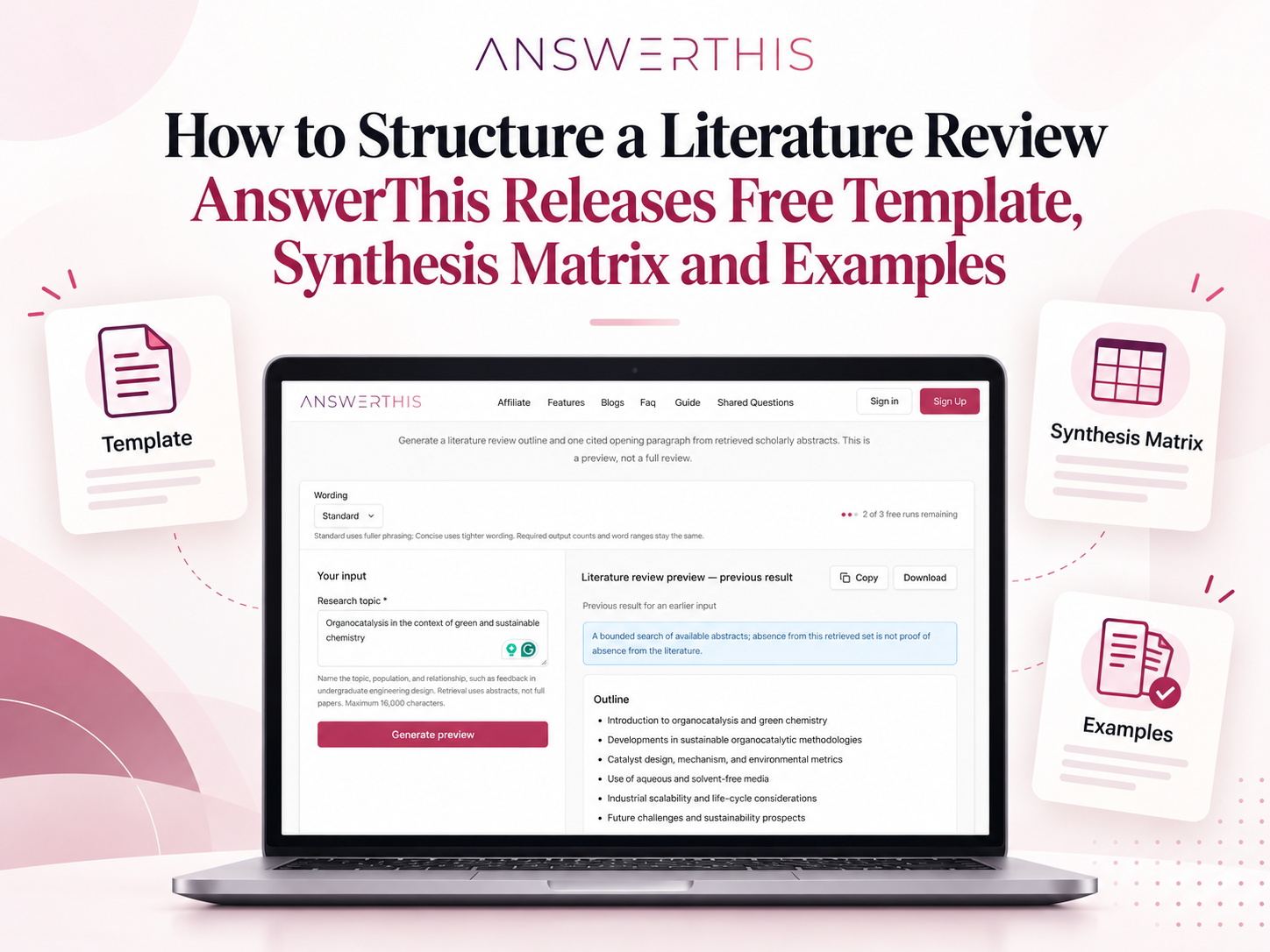
Research-methods resources combine outline, source and synthesis matrices, annotated examples and source checks for AI-assisted reviews.
SAN FRANCISCO, CA, UNITED STATES, November 29, 2026 /EINPresswire.com/ — AnswerThis today released a free literature review toolkit centered on a downloadable literature review template and synthesis matrix that helps researchers compare studies by research question, method, sample, findings and limitations. The toolkit also includes an outline, step-by-step guidance and annotated literature review examples by discipline from business, social science and health research.
The toolkit addresses one of the harder parts of literature review writing: moving from individual paper summaries to a critical synthesis that explains where studies agree, where they differ and what the evidence supports. The matrix gives researchers a structure for their own analysis. It does not replace reading, evaluating or interpreting the original studies.
The downloadable matrix is the new asset accompanying AnswerThis’s existing research-methods guides. Its five comparison fields are Question, Method, Sample, Finding and Limitation. Recording comparable information helps researchers examine whether differences between findings reflect study design, participants or other conditions, while keeping source-reported information separate from their own interpretation.
The accompanying template provides a scaffold for defining the research question and scope, explaining how evidence was assembled, developing analytical body sections and drawing a bounded conclusion. Researchers can use these resources for a standalone review or a review forming part of a thesis, dissertation or research proposal.
Workflow, Examples and Source Verification
The step-by-step guide sets out five stages: define the question and scope, build and document the search, screen and evaluate sources, extract comparable evidence, and synthesize, draft and revise.
The guide also explains thematic, chronological and methodological ways to organize a literature review. These are organizational structures rather than distinct review methods. It separately explains that a systematic review requires predefined, documented methods for searching, selecting and appraising evidence. A template or spreadsheet alone does not make a review systematic.
Review length should follow the assignment, discipline and scope. The guidance distinguishes a short course assignment from a dissertation chapter rather than prescribing a single word count for every review.
The annotated examples examine Hannah Snyder’s 2019 business-methods article, Jessica Hagen-Zanker’s 2008 review of migration theory and the Cochrane approach to health evidence. A weak-versus-improved paragraph illustrates how analytical synthesis explains relationships across studies instead of listing findings.
For AI-assisted reviews, AnswerThis step-by-step literature review guide emphasizes identifiable sources and direct verification. Researchers should open original papers, confirm bibliographic details and quotation wording, check that citations support the attached claims, and retain search and inclusion records. These checks address fabricated citations and unsupported interpretations without promising error-free results.
Toolkit Access
The literature review toolkit is available free from AnswerThis. Researchers can download the synthesis matrix and use the companion guides for review structure, source evaluation and evidence synthesis.
About AnswerThis
AnswerThis develops AI-assisted research tools and educational resources for researchers, students and institutions. Its literature review resources cover question scoping, source evaluation, evidence comparison, review structure and citation checking. The toolkit supports researchers’ own analysis and does not replace scholarly judgment or original-source verification.
Ryan Mccarroll
AnswerThis.io
ryan@answerthis.io
Visit us on social media:
LinkedIn
Instagram
Facebook
YouTube
TikTok
X
AnswerThis Full Tutorial
Legal Disclaimer:
EIN Presswire provides this news content “as is” without warranty of any kind. We do not accept any responsibility or liability
for the accuracy, content, images, videos, licenses, completeness, legality, or reliability of the information contained in this
article. If you have any complaints or copyright issues related to this article, kindly contact the author above.

Media gallery